
Fall has a way of making landscape priorities easier to see.
Once the summer season winds down and fall maintenance begins, homeowners often notice the areas they want to improve next: a backyard that never quite became functional, a front entry that needs attention, an HOA issue that cannot wait, or a larger landscape vision that may simply be too much to tackle at one time.
That does not always mean putting the entire project on hold.
Landscape project phasing in North Idaho allows a larger design to be built strategically over multiple seasons, budget cycles, or areas of the property while still working toward one cohesive finished landscape.
At Copper Creek Landscaping, phasing is not treated as dividing one project into random pieces. We plan the full picture first, then determine which portions make the most sense to build now, what should come later, and what needs to happen behind the scenes so finished work does not have to be unnecessarily disturbed in the future.
What Does It Mean to Phase a Landscape Project?
A phased landscape project starts with an overall plan but divides construction into intentional stages.
That may mean completing work across different seasons, splitting the project according to budget, or prioritizing specific portions of the property first.
The important distinction is that the phases are planned together.
If you already know the ultimate goal for the property, decisions made during Phase One can support Phase Two rather than create obstacles for it.
For large properties in Hayden, Hayden Lake, Coeur d’Alene, Sandpoint, and throughout North Idaho, this can be especially useful when the final landscape includes multiple outdoor living areas, extensive hardscape, planting, lighting, irrigation, grading, utilities, pools, structures, or other specialty features.
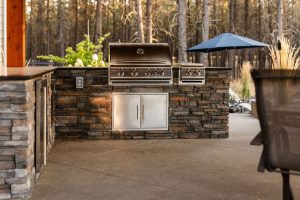
Landscape Project Phasing by Season
One of the most natural ways to phase a North Idaho landscape is around our construction seasons.
A project may begin in the fall with grading, demolition, underground work, utilities, drainage, retaining elements, or portions of hardscape, then resume in spring as weather conditions allow.
Final planting, irrigation adjustments, outdoor furnishings, and finish work can then be completed in spring or early summer.
This approach can allow meaningful progress to happen before winter rather than waiting for an entire project to start the following year.
It can also be helpful when certain portions of a project are better suited to different seasons.
The key is making sure the property is left in a logical, safe, and functional condition between phases.
Phasing for Budget
Sometimes the vision is larger than the budget available in a single year.
Phasing allows homeowners to invest in the property gradually without abandoning the larger design.
For example, Phase One might establish the primary patio, grading, utilities, and circulation. A later phase could add an outdoor kitchen, landscape lighting, additional planting, a fire feature, or another outdoor living area.
This can make a major landscape project more manageable in the short term.
There is, however, an important tradeoff.
Completing work over several years may mean later phases are affected by increases in material pricing, labor costs, mobilization expenses, or changes in product availability. A phased project can therefore cost less right now while potentially costing more overall than completing the same scope continuously.
That does not make phasing a bad strategy. It simply means homeowners should understand both sides when deciding how to invest.
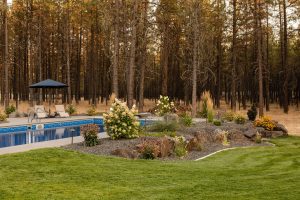
Phasing by Scope: Front Yard, Backyard, or Individual Outdoor Spaces
Large properties do not always need to be completed all at once.
Sometimes the cleanest approach is to divide the project geographically.
A homeowner may decide to complete the backyard and primary outdoor living space first while leaving the front yard for a later phase.
Another project may prioritize the front entry and driveway before moving into the backyard.
This works particularly well when each portion of the property can function independently while still tying into the overall design.
A good phased landscape should never look as though the designer simply stopped halfway through.
Transitions, temporary edges, planting, grading, and circulation all need to be considered so the completed phase feels intentional even while another portion remains for the future.
Sometimes the First Phase Is Simply Solving the Urgent Problem
Not every landscape project begins because a homeowner is ready for a complete transformation.
Sometimes there is an immediate issue that needs to be addressed.
An HOA may require screening or completion of unfinished landscaping. Drainage may be creating a problem. A front yard may need to meet neighborhood requirements while the homeowner ultimately wants to redesign the entire property.
In those situations, Phase One can solve the urgent need without sacrificing the long-term plan.
Rather than making a temporary improvement that will eventually be demolished, we can design that initial work as part of the finished landscape.
The homeowner gets the problem solved now while continuing to move toward the larger vision.
The Biggest Challenge With Phasing: Building Things in the Right Order
This is where professional planning becomes especially important.
A landscape is more than what you see on the surface.
Below patios, lawns, planting beds, and outdoor living spaces may be electrical conduit, gas lines, irrigation sleeves, drainage systems, lighting wire, water lines, pool utilities, or other infrastructure.
If those systems are not considered during the first phase, completing a later phase can mean cutting through finished landscaping to install them.
That is exactly what we try to avoid.
If we know a future outdoor kitchen, lighting system, pool, fire feature, or structure is planned, underground utilities and sleeves can often be incorporated during an earlier phase.
That may mean installing something today that will not actually be connected or used until a later year.
It is far easier to plan ahead than to trench through a finished patio two years later.
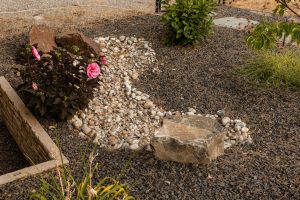
How Copper Creek Designs Differently for a Phased Project
A landscape intended to be phased may be designed somewhat differently from a project scheduled to be built all at once.
The final vision still drives the design, but we also consider how each construction stage will function independently.
That can affect hardscape boundaries, utility locations, grading, irrigation zones, planting areas, access routes, and even material selections.
We may create logical stopping points within a patio rather than ending in the middle of a pattern. We may install sleeves under hardscapes for future utilities. Irrigation can be designed so future zones can be added without completely rebuilding the system.
Planting can also help bridge phases.
A temporary planting area may soften a future construction zone, or the initial plant palette may be arranged so later additions blend seamlessly into the established landscape.
The goal is to make Phase One look finished without making Phase Two unnecessarily difficult.
The Advantages of Landscape Project Phasing
The biggest benefit is flexibility.
Phasing can allow homeowners to begin sooner, spread investment across multiple years, prioritize the areas they use most, and respond to immediate property needs without giving up the larger plan.
It can also give homeowners time to live with portions of the landscape and better understand how they use the property before moving into subsequent phases.
For some projects, that can lead to better decisions.
The Potential Downsides of Phasing
There are also reasons completing a project at once can be more efficient.
Every additional phase can require renewed mobilization, site protection, scheduling, and setup. Prices for materials and labor can change over time. Products selected in the original design may eventually be discontinued or change in appearance.
Construction access can also become more complicated once portions of the property are finished.
A machine can easily cross an unfinished yard. Moving that same machine past established planting, finished pavers, lighting, and irrigation several years later requires significantly more care.
That is why deciding where one phase ends is often just as important as deciding what is included in it.
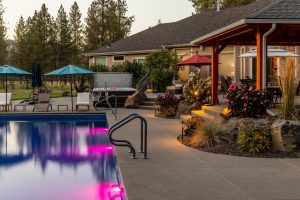
Should You Phase Your North Idaho Landscape Project?
There is no single right answer.
For some homeowners, building the entire project at once offers the greatest efficiency and the fastest path to the finished space.
For others, a carefully phased approach makes the project possible.
The important thing is to make the decision before construction begins whenever possible.
A complete landscape design gives your designer and construction team the ability to anticipate future work, sequence infrastructure appropriately, and protect the investment made during each stage.
Start With the Full Vision, Even If You Build It in Pieces
The best phased landscapes begin with a complete idea.
You may only build the backyard this year. You may need to solve an HOA issue first. You may want to complete grading and utilities in the fall and return for hardscape, planting, and finish work in spring.
That is completely workable when those decisions are made intentionally.
Copper Creek Landscaping designs and builds landscapes throughout Hayden, Hayden Lake, Coeur d’Alene, Sandpoint, and the surrounding North Idaho region. Whether a project is completed in one construction season or over several carefully planned phases, our goal is the same: make every decision support the finished landscape.
If you are considering landscape project phasing in North Idaho, start with the full plan. We can help determine what should happen first, what can wait, and how to build each phase without creating unnecessary work later.